






Data Center Flooring: Aluminium Raised Floor Versus Steel Raised Floor?
 Jul 31, 2026|
 View:115
You need to pick the best floor for your main data center right now. Choose an aluminum raised floor for cleanrooms, heavy equipment, non-magnetic spaces, or wet areas. Pick steel panels for budget-friendly, normal critical setups. Check load strength and weight balance carefully to protect your building. Compare rust protection and total price before buying data center floor tiles. An aluminium raised access floor works much better in damp places. Meanwhile, strong steel raised floor systems reduce your starting gear costs. Use this helpful guide to improve your raised access floor system with light aluminum parts.
Key Takeaways
Aluminum floor panels resist rust and magnetic forces in wet or sensitive tech spaces.
Steel floor panels provide great strength at a lower initial price for simple dry server rooms.
Easy-to-carry aluminum panels lower the overall weight of a building and make reaching underfloor cables very simple.
Vented aluminum floor tiles improve airflow to cool hot servers and reduce energy costs.
Comparing Aluminium Raised Access Floor vs Steel Systems
Load Capacity and Structural Performance
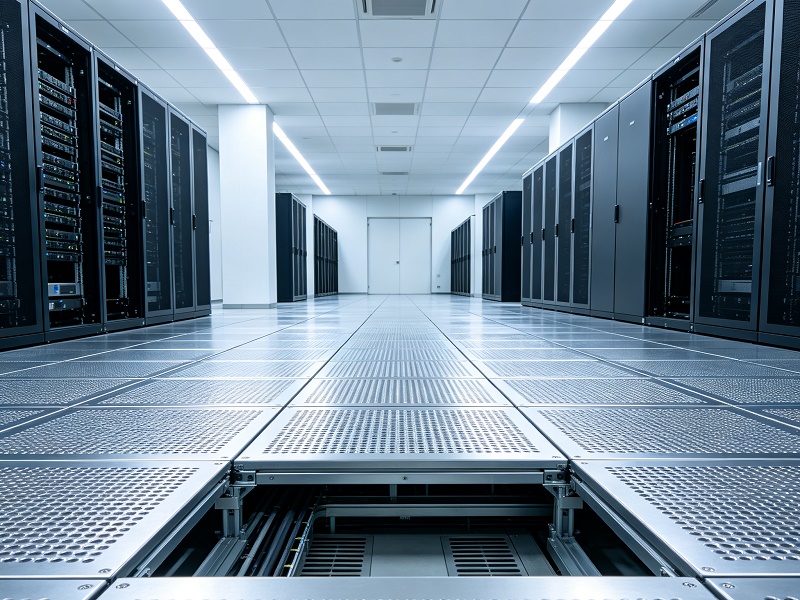
You must check strength when picking data center floor tiles for your center. Heavy server racks put constant weight on building frames. Workers also roll heavy equipment carts across the raised access floor surface, creating moving loads.
Cement-filled steel panels handle heavy sitting weight for still gear. However, moving heavy carts over time can crack the cement inside. Solid die-cast aluminum panels offer high strength without breaking down inside. These aluminum floor panels keep their strong shape even when moving heavy gear often.
Model | Concentrated Load (Deflection ≤ 2.0mm) | Rolling Load |
|---|---|---|
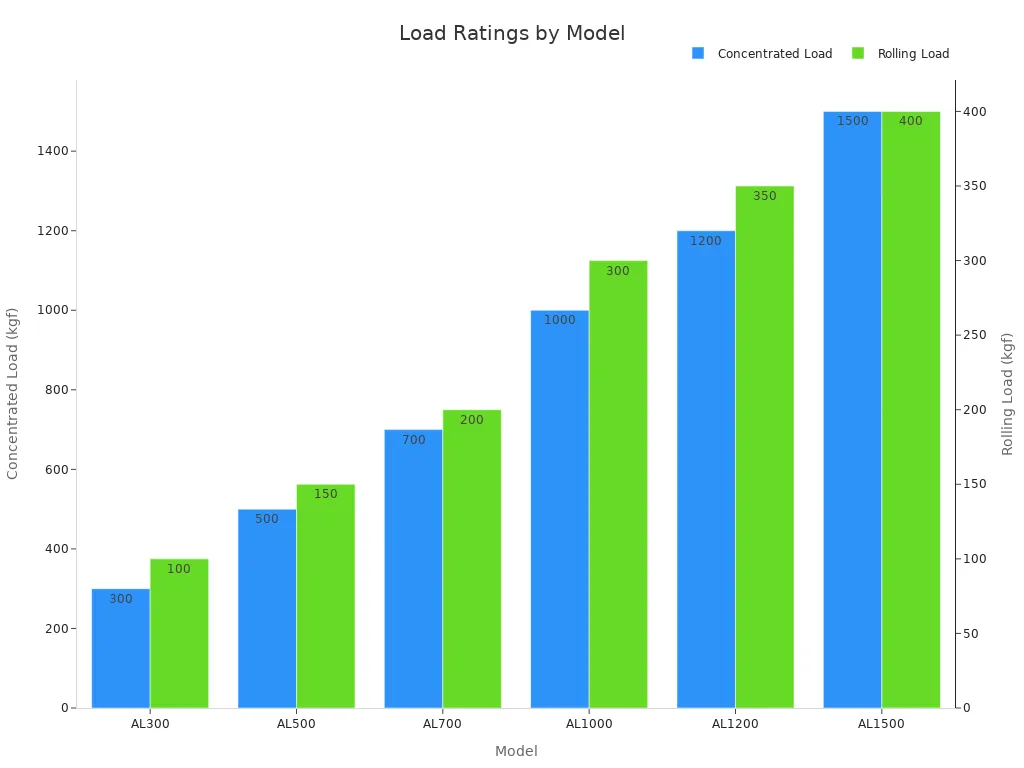
AL300 | 300 kgf / 6.45 cm² | 100 kgf |
AL500 | 500 kgf / 6.45 cm² | 150 kgf |
AL700 | 700 kgf / 6.45 cm² | 200 kgf |
AL1000 | 1000 kgf / 6.45 cm² | 300 kgf |
AL1200 | 1200 kgf / 6.45 cm² | 350 kgf |
AL1500 | 1500 kgf / 6.45 cm² | 400 kgf |
Die-cast builds ensure high strength across all weight levels. The chart below shows how different aluminum models handle moving and fixed weight:
Normal aluminum panels hold 1,200 pounds on a small one-inch square space. Medium duty panels hold up to 2,000 pounds on that same small space. Heavy duty aluminum floor panels hold 3,000 pounds while bending less than 0.080 inches under a two-inch space. These tight size limits make sure your strong panels stay steady under pressure.
Weight Distribution and Building Impact
Picking between steel systems and aluminum access floors changes total building weight. Heavy steel panels add extra weight to the floor structure below. This added weight makes setup harder and puts more pressure on support legs.
In contrast, light aluminum raised floor systems reduce the building's overall weight. Using light floor systems cuts floor weight by 25-35% compared to solid concrete. You can shift these light floor panels easily during repairs, saving money on labor during room changes.
Environmental Condition | Aluminum Advantage | Steel Limitation |
|---|---|---|
Coastal / High Humidity | Naturally forms protective oxide layer; no rust; longer service life | Galvanized coating can be damaged over time, leading to localized corrosion |
Cleanroom (ISO-certified) | Low particle generation; high dimensional precision; easy cleaning; no concrete dust | Not specified as preferred; higher contamination risk |
Airflow Precision | Allows extremely precise airflow openings for semiconductor and pharma | Both support perforated panels, but precision is less emphasized |
Pharmaceutical / Food Processing | Suitable due to corrosion resistance and cleanability | Coating damage risk in humid or washdown environments |
The light build of an aluminium raised access floor gives high flexibility for tech spaces. You can move your data center floor tiles easily as computer gear grows. Choosing an aluminum raised floor system protects building strength while giving easy entry to underfloor wires in your modern data center.
Advantages of ZiLi Aluminum Raised Floor Systems
Corrosion Resistance and Non-Magnetic Properties
Moisture damages normal floor tiles in damp places. Naturally rust-proof aluminum access floors resist water damage without extra protective coatings. Picking an aluminum raised floor shields your server room from rust. These solid panels stay strong across coastal regions. These long-lasting floor panels work well in humid spaces. Easy recycling also lowers total gear costs for your building.
Iron-based materials cause magnetic problems inside important rooms. Strong magnetic forces mess up signals in digital storage media. This interference causes severe data loss in server racks. Pure aluminum has zero magnetic properties. Using an aluminium raised access floor stops signal problems in your gear. You protect sensitive data storage systems by removing magnetic danger.
ZiLi Die-Cast Manufacturing and Anti-Static Finishes
ZiLi brings decades of building experience to raised floor systems. Large hydraulic presses shape pure die-cast aluminum under strong pressure. These sturdy floor panels earn a Class A1 fire rating for high safety standards. You can pick top surface coverings like anti-static HPL, conductive PVC, or ceramic tiles. These covers safely clear static electricity to protect costly computers. The table below lists our factory details and official papers:
Category | Details |
|---|---|
Certifications | ISO9001, ISO14001, OHSA18001 |
Annual Production Capacity | More than 1 million square meters |
Plant Area | Over 20,000 square meters |
Employees | Approximately 150 |
Our modern plant handles large global data building projects easily. Very exact sizes ensure smooth entry to underfloor cable space. You can lift single data center floor tiles fast during regular care. Your workers reach wiring easily without bothering nearby server racks. ZiLi supplies custom data center floor tiles to boost overall building performance. Picking an aluminum raised floor system promises long-lasting service for your modern tech center.
Overview of Steel Access Flooring in Data Centers
Cementitious Steel Panel Cost Efficiency
You pick steel raised access floors to save money on new tech buildings. Cement-filled steel tiles offer strong support at a very low starting price. Workers pour special cement inside a welded metal shell to build them. This solid layout holds standard server racks securely without overspending on your building budget. You cut initial gear costs while building a steady base for computer hardware.
You order custom floor panels that fit your exact room layout plans. Standard local sizes make fitting panels together simple during floor tile setup.
Panel Size | Thickness | Primary Usage Region |
|---|---|---|
500mm x 500mm | 28mm | China, Japan, Korea |
600mm x 600mm | 33mm | Most areas worldwide |
610mm x 610mm (24" x 24") | Standard American size | United States |
Fire Resistance and Standard Deployment
Fireproof steel data center floor tiles bring great fire safety to critical computing rooms. Fitting quality data center floor tiles meets tough global fire safety rules easily. Non-burning core materials earn top Class A1 ratings under EN 13501-1 test rules. Sealed metal floor panels also meet British Standard BS 476 flame spread test limits. These safety ratings shield valuable gear from severe heat and fire dangers.
Classic steel access tiles remain a common pick for standard data room layouts. Fitting steel data center floor tiles lets you reach lower power cables fast. You keep easy entry to hidden wires while holding high structural strength across rooms. Facility managers use sturdy floors to handle daily foot traffic and heavy server gear. Choosing strong steel floor tiles gives lasting physical protection to your buried cables.
Choosing the Right Data Center Floor Tiles
Airflow Management and Perforated Tile Efficiency
Computer servers get extremely hot while running hard. Choosing the right floor tiles helps cool your important machinery efficiently. Regular floor tiles block cold air below, but special vent panels direct cool air right into server vents. Using aluminum vent tiles gives your building top-quality temperature control. ZiLi aluminum vent panels feature up to 55% open space to maximize airflow.
Engineers use simple math formulas to figure out cooling needs under the floor. Heat output is easy to calculate: watts equal 0.316 times air volume times the temperature change in Fahrenheit. Every kilowatt of running server power needs about 150 cubic feet of cold air each minute.
Rack Density | Recommended Tile Type | Open Area (%) |
|---|---|---|
1–5 kW | Standard perforated tile | ~25% |
5–12 kW | High airflow floor tile | 56% or more |
12 kW and above | Directional airflow tile or damper panel | Custom configuration |
Matching tile vents to server power stops expensive cold air from wasting away. Basic tiles have 25–32% open area, wasting 40–60% of cold air while cooling 5–7 kW racks. Angled vent panels have 65–68% open space, cutting wasted air to 15–25% while cooling 8–12 kW racks. You can drop new floor panels into current rows to fix dangerous hot spots right away.
Environmental Resilience and Facility Longevity
Your building environment helps determine the best long-lasting material for floor panels. Damp or salty air slowly ruins steel tiles by destroying protective zinc or paint coatings. Solid aluminum resists rust naturally, keeping it dependable in humid or chemical-heavy rooms. Check main technical needs before setting up your raised floor system to pick perfect panels.
Parameter | What It Measures | Relevance to Selection |
|---|---|---|
Concentrated load | Weight over a small area | Critical for rack feet and equipment legs |
Rolling load | Repeated wheel movement | Essential for carts and equipment relocation paths |
Uniform load | Weight spread across panel | Useful for broad distribution across raised floor |
Ultimate load | Structural failure point | Indicates total failure capacity under extreme stress |
Impact load | Response to dropped objects | Important during initial access floor installation |
Pedestal axial load | Vertical load through pedestal | Evaluates understructure support capacity |
Overturning resistance | Horizontal force resistance | Key parameter for high floors and seismic zones |
Engineers follow a simple plan when selecting the ideal floor tiles:
Pick painted steel for dry indoor spaces if you must save money.
Choose zinc-coated steel for inland locations to lower upkeep needs and cut total costs.
Use aluminum floor tiles near oceans or damp areas, paying 15–20% more for total rust protection.
Strong materials help your data center last much longer. Lightweight aluminum tiles are non-magnetic, which keeps delicate server gear safe. Meanwhile, sturdy steel floor panels provide long-lasting support in basic dry rooms. Picking smart floor tiles protects building strength, improves air movement beneath floors, and lowers overall cooling expenses.
Tiny floating dust ruins delicate tech gear. Check this easy guide to pick the best floor parts for your building:
Criteria | Steel Perforated Panel | Aluminum Perforated Panel |
|---|---|---|
Primary Recommendation | Standard computer rooms, control centers, basic electric spaces | Wet areas, sterile cleanrooms, damp places, signal-blocked rooms |
Key Advantages | Holds heavy weight, budget friendly, totally fireproof core | Very light, blocks water, rust resistant, dust free, static safe forever, recyclable |
Key Disadvantages | Can rust quickly in damp places | Costs more money at first |
We recommend using aluminum floors in clean rooms and dust-free shops. These panels feature exact sizes, good electricity flow, strong fire safety, and zero magnetic pull without bending. They stand as the finest option among static-proof floor choices.
Basic computer rooms install simple steel floor panels to keep project costs low. However, high-tech cleanrooms require aluminum tiles to block harmful dust particles.
ZiLi makes custom floor systems for large international projects. We make top-quality aluminum tiles to improve your server room performance. Talk to our technical team now to buy great raised floor parts.
FAQ
Why should you choose aluminum tiles in humid facilities?
Aluminum panels stop rust naturally in very wet spaces. Standard steel panels rust when water ruins their outer coating. You shield your main working building and keep data running safely by picking rust-proof aluminum floors.
How do specialized data center floor tiles optimize facility cooling?
Vented data center floor tiles push cold air straight to server racks. High-airflow aluminum floor panels offer adjustable air movement up to 55%. You improve heat control, lower wasted power, and guard expensive computer gear inside your main data room.
Are aluminum data center floor tiles completely non-magnetic?
Yes. Pure die-cast aluminum has no iron inside it at all. As a result, aluminum data center floor tiles clear away magnetic signal problems completely. You shield delicate electronic parts, keep signals clear, and stop magnetic data damage in your special tech building.
When should you select options for your data center setup?
You choose steel parts for basic, dry data center setups with small budgets. Cement-filled panels give strong building support for less money upfront. This low-cost pick keeps your main data gear safe inside standard computer rooms.