





 Oct 11, 2025
 View:118
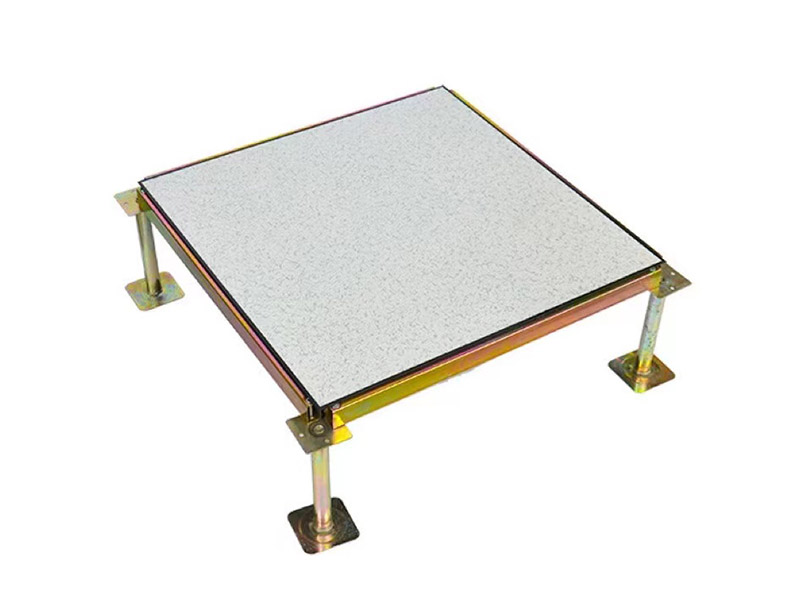
Choosing the best anti static floors depends on your facility type. Manufacturing plants often use rubber or epoxy esd flooring. These floors can handle heavy loads. Laboratories like esd vinyl tiles because they last long. Offices with tech areas pick esd carpet tiles for comfort.
Description | |
|---|---|
| ESD vinyl tiles | Strong and affordable for cleanrooms and labs. |
| Rubber ESD flooring | Works well with heavy loads and in tough places. |
| Epoxy ESD coatings | Has no seams and is used in big places with little dust. |
| ESD carpets | Used in office tech areas for comfort and looks. |
Picking the right esd flooring makes things safer. It lowers esd risks and helps meet industry rules. Good esd flooring protects electronics, keeps things cleaner, and lasts a long time.
Key Takeaways
Pick the best anti-static flooring for your facility type. Rubber works well for heavy loads. Vinyl is good for labs. Carpet fits offices best.
ESD flooring lowers the risk of static electricity damage. It protects sensitive equipment. This keeps your workplace safe. It also meets industry rules.
Clean and care for ESD floors often. This keeps them working well. It also helps them last longer.
Know the difference between conductive and dissipative flooring. Conductive flooring is best for high-risk places. Dissipative flooring is good for daily use.
Use a checklist to pick ESD flooring. Look at your facility’s needs. Check material properties. Make sure it follows safety rules.
Why Choose Anti Static Floors
Static Electricity Risks
Static electricity can be a big problem in many jobs. When people walk on the floor, they can get a static charge. This charge can jump to electronic equipment and cause harm. Even a tiny spark can break a computer chip or stop a machine. Some jobs, like aerospace, automotive, healthcare, and IT, have more risk. The table below shows what can happen if esd flooring is not used:
| Industry | |
|---|---|
| Aerospace | Electronic parts can break right away, and data can get lost. |
| Automotive | Machines can stop working, repairs cost a lot, and work stops. |
| Healthcare | People can get hurt, and machines may not work right. |
| IT | Products may not last long, and there can be work problems. |
Facilities use esd flooring for many reasons. It stops electrostatic discharge. It helps keep the work area safe and steady. It also protects important electronic equipment. Without static control flooring, things can go wrong. Machines can break, things can get dirty, and people can get hurt. Repairs can cost a lot, and work can stop for a long time. Electrostatic dissipative flooring helps stop hidden damage and big failures. It also lowers fire risk where things can catch fire. It keeps people safe in places like electronics and healthcare.
How ESD Flooring Works
ESD flooring moves static charges away from people and machines. The top layer of esd flooring has special stuff that lets electricity move safely. This helps protect sensitive electronic equipment. Vinyl tiles and sheets give good protection and help people move around. Rubber tiles and sheets keep electronics safe. Carpet tiles help keep patients and workers safe.
A science study showed that an esd system can lower electric charge fast. This means esd flooring keeps places safe for a long time. New esd floors use materials that are conductive or dissipative. These help control electricity and give good protection.
Rules like ANSI/ESD S20.20 and IEC 61340 say facilities must use esd flooring to keep electronics safe. By picking the right static control floors, facilities stay safe, protect electronics, and keep work running well.
Types of ESD Flooring

Epoxy ESD Flooring
Epoxy esd flooring is very strong and controls static well. Many places use it where machines are heavy or people walk a lot. Epoxy esd coatings make a smooth floor that keeps out dust and chemicals. These floors follow strict safety rules and come in many colors. Only trained workers can put them in, and they cost more at first.
Tip: Epoxy esd flooring lasts a long time and does not need to be replaced often, so it makes less waste.
Key Features:
Very strong
Great at stopping static
Many looks to pick from
Follows safety rules
| Feature | Description |
|---|---|
| Static Dissipation | Stops static from building up and sends it safely to the ground. |
| Compliance with Standards | Follows tough safety and work rules for static control. |
| Customizable Options | Comes in lots of colors and styles to match how a place looks but still works well. |
Rubber ESD Flooring
Rubber esd flooring is good for factories and big storage places. It can hold heavy things and take lots of hits. This esd flooring stops static really well. You need special skills to put it in, but it is very tough and lasts.
Pros:
Stops static very well
Can take hard hits
Cons:
Needs special workers to install
Vinyl ESD Flooring
Vinyl esd flooring is cheap and works well in labs and clean rooms. It is simple to put in and easy to clean. Vinyl esd tiles stop static and keep important equipment safe. You do not need to weld them, but you should look out for hidden problems.
Benefits:
Costs less at first
Easy to put in
Good at stopping static
Carpet ESD Tiles
Carpet esd tiles are great for offices and tech rooms. They feel soft and help keep noise down. These tiles come in different static control levels. Carpet esd flooring looks nice and feels good, but it does not last as long as other types.
| Advantages | Limitations |
|---|---|
| Very good at making rooms quiet | Costs more at first than other esd floors |
| Looks nice and feels soft | Does not last as long as stronger floors |
| Comes in many static control levels | Not good for heavy things or lots of walking |
ESD Wax Finishes
ESD wax finishes are a fast way to add static control to old floors. It is easy to put on and does not need much care. ESD wax follows safety rules and helps stop slips. It lasts about one year and is safe for the earth.
| Feature | Detail |
|---|---|
| Shelf Life | Lasts one year after you buy it |
| ESD Performance | Follows ANSI/ESD S2020-2021,<3.5E07 with 2 coats |
| Application | Easy to use and needs little work |
| Environmental Impact | Breaks down safely and is good for nature |
| Slip Resistance | Has slip safety approved by UL |
Conductive vs Dissipative ESD Flooring
You pick conductive or dissipative esd flooring based on what your facility needs. Both types help stop static electricity, but they do this in different ways because their resistance levels are not the same.
Conductive ESD Flooring
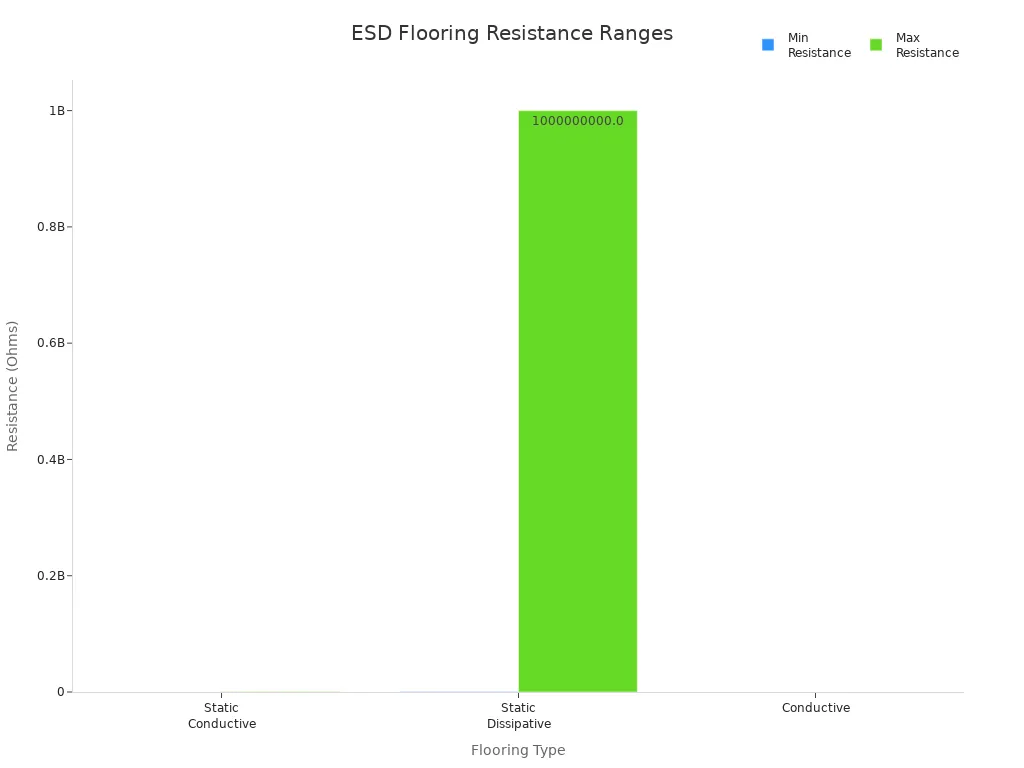
Conductive esd flooring uses special materials to send static charges to the ground fast. This flooring has low resistance, usually more than 1.0 x 10^4 ohms but less than 1.0 x 10^6 ohms. Some conductive esd floors can have resistance lower than 2.5 x 10^4 ohms. These low resistance numbers make conductive esd flooring good for places where even tiny static charges can cause big trouble.
| Type of Flooring | Resistance Range (Ohms) | Suitability for Facility Types |
|---|---|---|
| Static Conductive | > 1.0 x 10^4 to < 1.0 x 10^6 | Used in electronic manufacturing and sensitive places |
| Conductive | < 2.5 x 10^4 | Best for places needing strong static control |
Electronics factories, aerospace, and car makers often use conductive esd flooring. These jobs need strong static control to keep equipment safe. The conductive materials in the floor help stop static from building up in work areas, cleanrooms, and labs.
Tip: Conductive esd flooring is great for high-risk places like munitions or semiconductor plants.
Dissipative ESD Flooring
Dissipative esd flooring uses different materials to slow down how static charges move. The resistance for dissipative esd flooring is higher, from more than 1.0 x 10^6 ohms to less than 1.0 x 10^9 ohms. This slower movement helps protect delicate electronics and keeps people safe.
| ESD Flooring Type | Resistance (Ω) Range (Low End) | Resistance (Ω) Range (High End) |
|---|---|---|
| Dissipative | 1,000,000 | 1,000,000,000 |
Dissipative esd flooring works well in places like medical device factories, data centers, and aerospace assembly. These places need static control but do not have the same high risks as explosive areas. Dissipative materials help meet safety rules in these places.
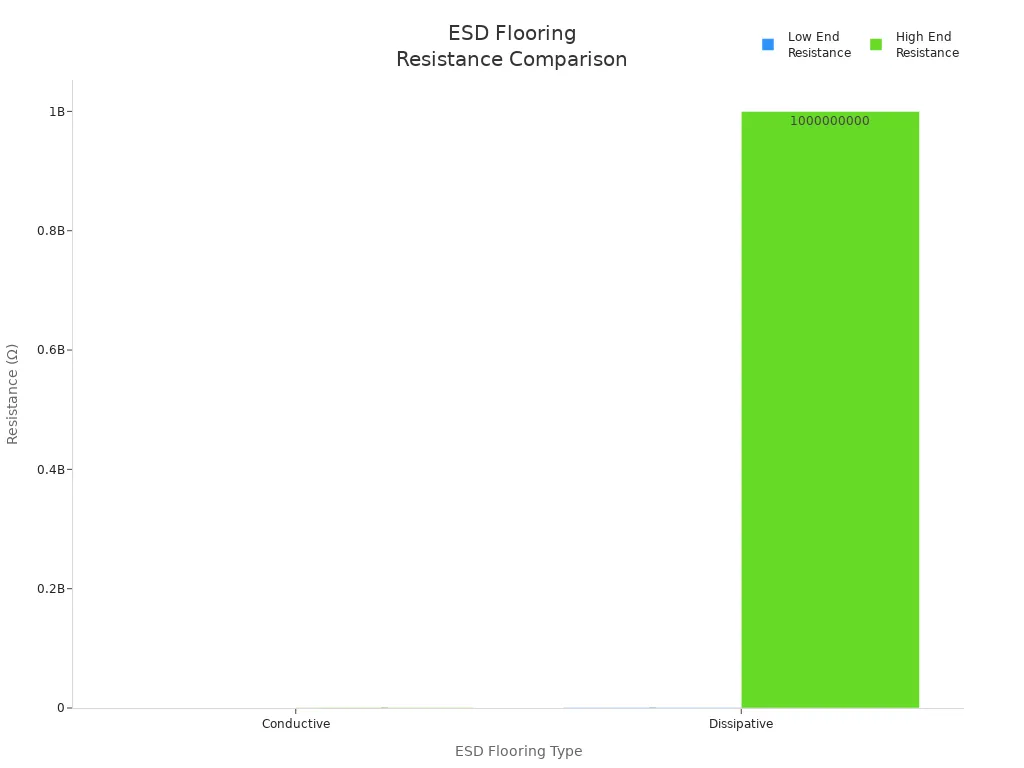
Facilities should check their equipment and safety needs before picking conductive or dissipative esd flooring. Conductive materials move static fast for risky places. Dissipative materials slow static for safer, everyday use.
Comparing Anti Static Floors
Durability
Facility managers want floors that last a long time. They also want floors that can handle lots of use. Different esd floors have different strengths. The table below shows how anti-static raised floors and standard raised floors compare in busy places:
| Feature | Anti-Static Raised Floors | Standard Raised Floors |
|---|---|---|
| ESD Resistance Range | 10^6 - 10^9 ohms (compliant with ANSI/ESD S20.20, IEC 61340) | >10^9 ohms (insulating, no ESD compliance) |
| Material & Durability | PVC-laminated steel, ceramic-steel composites, galvanized steel-encased calcium sulphate. Fire-resistant and corrosion-proof. | Cement or basic all-steel. Focus on general durability. |
| Compliance Standards | ESD: ANSI/ESD S20.20; Fire: ASTM E84-14; Structure: CISCA. | General standards: ISO 10581; no ESD certifications. |
| Suitable Applications | High-end offices, data centers, military command centers. | General-use spaces, non-sensitive offices. |
| Maintenance Requirements | Regular ESD testing and grounding inspections. | Minimal maintenance, routine cleaning. |
| Key Advantages | Permanent ESD protection, compliance with global regulations. | Cost-effective for non-ESD environments. |
Epoxy esd flooring and rubber esd flooring are very tough. They do not get damaged by heavy machines.
Vinyl esd flooring lasts a long time in labs and cleanrooms.
Carpet esd tiles are good for offices but wear out faster in busy spots.
ESD wax finishes only protect for a short time and need to be put on again.
Tip: Picking the right static control floor helps keep people safe and makes floors last longer.
Installation
How you put in esd flooring depends on the type and what the building needs.
New buildings often use epoxy or rubber esd flooring for strong static control.
Older buildings may use esd tiles that do not need glue to save time.
Some floors can be put down quickly and are easy to swap out.
Anti-static raised floors need special workers and must follow rules like IEC 61340-5-1.
Workers must check grounding to make sure static is controlled.
Adding grounding systems can make the job harder.
Managers should think about how long it takes to install. Good installation keeps people safe and helps floors last longer.
Cost
Cost is important when picking esd flooring. The table below shows how much common types cost per square foot:
| Flooring Type | Average Cost per Square Foot (PSF) |
|---|---|
| ESD Tiles | $5.50 - $12.50 |
| ESD Epoxy Paint | $1.65 - $2.00 |
| ESD Carpet | $5.50 - $8.50 |
| Concrete Sealers | <$0.44 |
Epoxy esd flooring costs less at first and lasts a long time.
ESD tiles and carpet have different prices, with fancy ones costing more.
ESD wax and coatings are cheapest but need more care.
Managers should think about price, how long the floor will last, and how much care it needs.
ESD Performance
The main job of esd flooring is to stop static and protect equipment.
Conductive esd flooring, like conductive rubber, makes less static than vinyl or epoxy.
Conductive rubber flooring meets tough rules and makes less than 100 volts with special shoes.
Vinyl and epoxy esd floors can sometimes go over this limit.
Both conductive and dissipative esd floors help meet ANSI/ESD S20.20 and IEC 61340 rules.
Conductive esd flooring is best for risky places. Dissipative esd flooring is good for regular electronics and healthcare.
Note: Testing esd floors often makes sure they keep working well and stay safe.
Maintenance
Taking care of esd floors keeps them working and helps them last.
All esd floors are easy to clean, which is good because dirt can hurt static control. (source)
Cleaning with the right products keeps floors safe and strong.
Do not use strong cleaners that can hurt the static control layer.
Wait five days after putting in the floor before using water or machines.
Use safety signs when floors are wet so no one slips.
ESD floors do not flake, peel, bend, rust, or chip, so they are easy to care for.
Checking and testing esd floors often helps them work well and follow rules.
Managers who do these things help keep their workspaces safe and floors lasting longer.
Decision Guide for Facilities
Selection Checklist
Facility managers need a simple way to pick the right esd flooring. Experts say it is important to stop electrostatic discharge. This can hurt sensitive equipment. The checklist below helps managers look at choices and avoid mistakes.
Identify Facility Needs
Managers should know how esd risks show up in their space. They need to think about how static builds up and what could happen if it discharges.Review Material Properties
Each esd flooring type has different conductive features. Managers should check if the material meets the needed resistance for their use.Assess Durability and Maintenance
Managers must see how well the floor lasts with daily use. They should also check if it is easy to keep the esd working over time.Check Compliance and Testing
Facilities must make sure the flooring passes rules like ANSI/ESD S20.20.The voltage from a person, floor, and shoes should not go over -13.8 volts for a PASS at less than +/-100 volts.
Plan for Professional Installation
Good installation makes conductive and dissipative esd flooring work better. Managers should check the sub-floor to stop water or dirt problems.
| Criteria | Description |
|---|---|
| Costs | Compare starting price with money saved by good esd flooring. |
| Durability | See if the floor can handle wear in factories or labs. |
| Maintenance | Check how much work is needed to keep esd strong. |
| Material Properties | Look at how well the floor controls static. |
Facility Scenarios
Different places need certain types of esd flooring. The table below shows common places, the best flooring, and real examples.
| Facility Scenario | ESD Flooring Type | Example Application |
|---|---|---|
| Cleanrooms and manufacturing environments | Antistatic floors | An automotive company in Malaysia uses esd flooring to protect electronics. |
| Electronics components manufacturing | Antistatic floors | An electronics factory in Malaysia puts in conductive flooring for static control. |
| Medical systems | Antistatic floors | A medical device facility in Malaysia uses esd flooring to keep equipment safe. |
| Food & beverage production | Antistatic floors | A food site in Indonesia uses esd flooring for clean and static-free work. |
| Educational institutions | Antistatic floors | A university in Macau picks esd flooring for safe learning spaces. |
Facility managers should not ignore resistance levels or skip professional installation. They need to know the difference between conductive and dissipative flooring. They should pick the type that fits their needs. Regular testing and care keep esd flooring working and following the rules.
Installation and Care Tips

Preparation
Getting ready the right way helps anti static flooring work well and last long. Facility managers should do these steps before putting in the floor:
Determine the Requirements: Look at what the facility needs. Check industry rules and safety laws.
Choose the Right Flooring Material: Pick the best type, like vinyl, epoxy, or rubber. Make sure it fits the place and how it will be used.
Prepare the Subfloor: Clean the subfloor very well. Take away all dust, dirt, and water. The surface should be smooth and dry.
Install Conductive Underlayment (If Required): Some floors need a special layer under them. This layer helps electricity move better.
Install the ESD Flooring: Put down the flooring as the maker says. Follow each step in the instructions.
Conduct Testing and Certification: Test the floor to see if it meets ESD rules. Make sure it passes all safety checks.
Implement Proper Maintenance: Make a plan to care for the floor. This helps it work well for a long time.
Tip: Getting ready the right way stops problems. It helps the floor give good static protection.
Long-Term Maintenance
Taking care of ESD flooring often keeps it safe and working right. A good cleaning plan helps the floor last longer and keeps equipment safe.
Initial Cleaning After Installation: Clean the floor one to three days after it is put in. Use a pH-neutral cleaner and soft tools.
Daily Cleaning: Sweep or mop the floor every day. Clean up spills fast so the floor does not get hurt.
Routine Maintenance: Deep clean busy spots every week or two. Have pros check the floor to see if it is still in good shape.
Recommended Tools: Use microfiber mops, slow rotary machines, and wet/dry vacuums. These tools work best.
Best Practices: Always use clean tools. Keep a list of when you clean the floor.
What to Avoid: Do not use mops with oil, rough pads, or strong chemicals.
Cleaning often helps the floor keep its conductivity.
ESD cleaning tools stop damage.
Cleaning up spills fast keeps the floor safe.
Do not let sharp things touch the floor.
Note: Keeping up with care helps the floor meet ESD rules. It keeps everyone in the facility safe.
Facility managers should pick anti static floors that fit their needs. Vinyl flooring is strong, quiet, and easy to clean. Rubber flooring stops slips and controls static well. Epoxy floors last a long time and fight off chemicals. Linoleum and ceramic floors are good for the earth and simple to clean.
ESD floors keep work areas clean and safe by stopping static and dust.
Anti static floors keep people and equipment safe in many places. These places include factories, labs, and offices. Managers can use the guide and checklist to help them choose. ZIli can give advice and help every facility stay safe and work well.
FAQ
What is the difference between conductive and dissipative ESD flooring?
Conductive ESD flooring lets static charges move to the ground fast. Dissipative ESD flooring makes static charges move slower. Facility managers pick one based on how much static control is needed.
How often should ESD flooring be tested?
Facility managers need to test ESD flooring two times a year. Testing often keeps the floor safe and helps it meet safety rules.
Can anti static floors be cleaned with regular cleaning products?
Managers should use cleaners that are pH-neutral. Strong cleaners can hurt the floor’s static control. Always read the cleaner label before using it.
Is ESD flooring suitable for office spaces?
ESD carpet tiles are good for offices, especially tech rooms. They feel comfortable and help stop static electricity.
How long does ESD wax finish last?
ESD wax finish lasts about one year. Managers should put on new wax every year to keep static protection.