






Comparing Types of Raised Office Flooring: Steel, Aluminum, and Woodcore
 Oct 08, 2026|
 View:4
No single raised office flooring type works for every project. The right choice depends on load needs, budget, environment, and installation limits. Traditional floors and raised floors differ in one basic way. A raised floor system leaves an empty space under the panels. This space holds cables, air, and utilities. The key differences between raised and traditional floors come down to that space. It gives easy access to utilities. Workers can move, add, or upgrade cables and pipes without breaking up concrete.
Steel gives strength. Aluminum is light and resists corrosion. Wood core raised flooring is quiet and budget-friendly. Each raised access floor type fits different offices. The parts of a raised floor system—panels, pedestals, and stringers—differ by material. These differences affect load capacity, durability, weight, installation, and cost. To match a raised floor to your office, understand those trade-offs.
Key Takeaways
Steel raised floors support heavy loads. They suit data centers. They fit busy offices. Choose steel for maximum strength.
Aluminum raised floors resist rust. They are light. They fit damp rooms. They suit upper-floor projects. Aluminum suits weight-limited spaces.
Wood core raised floors cost less. They feel quiet underfoot. They work well in offices. Choose wood core for savings.
Match the floor to your space. Data centers need steel. Wet rooms need aluminum. General offices need wood core.
Compare the total cost. Some cheap panels lack important parts. Weigh load, budget, durability. This choice gives lasting value.
Steel Raised Flooring and the All-Steel Raised Floor
Composition and Load Capacity
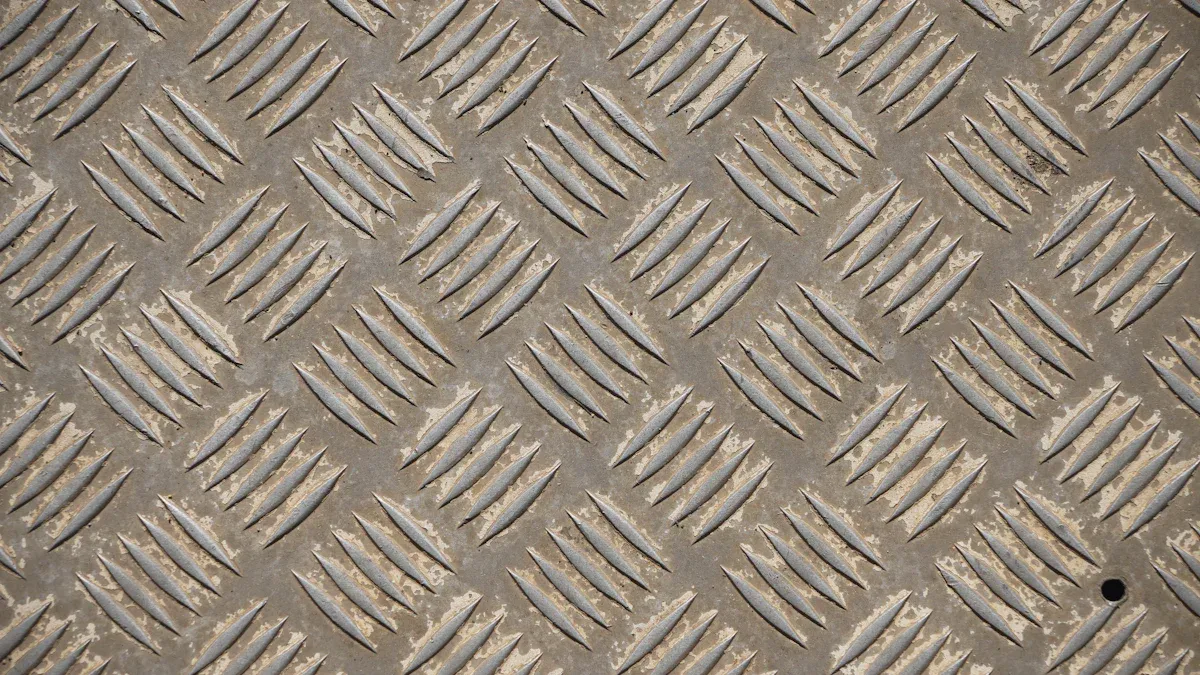
ZILI's All-Steel Raised Floor is a top example of this type. The panel has a strong cold-rolled steel shell. A steel cementitious core fills that shell. This build gives outstanding structural stability. The steel-covered panels resist bending under heavy equipment.
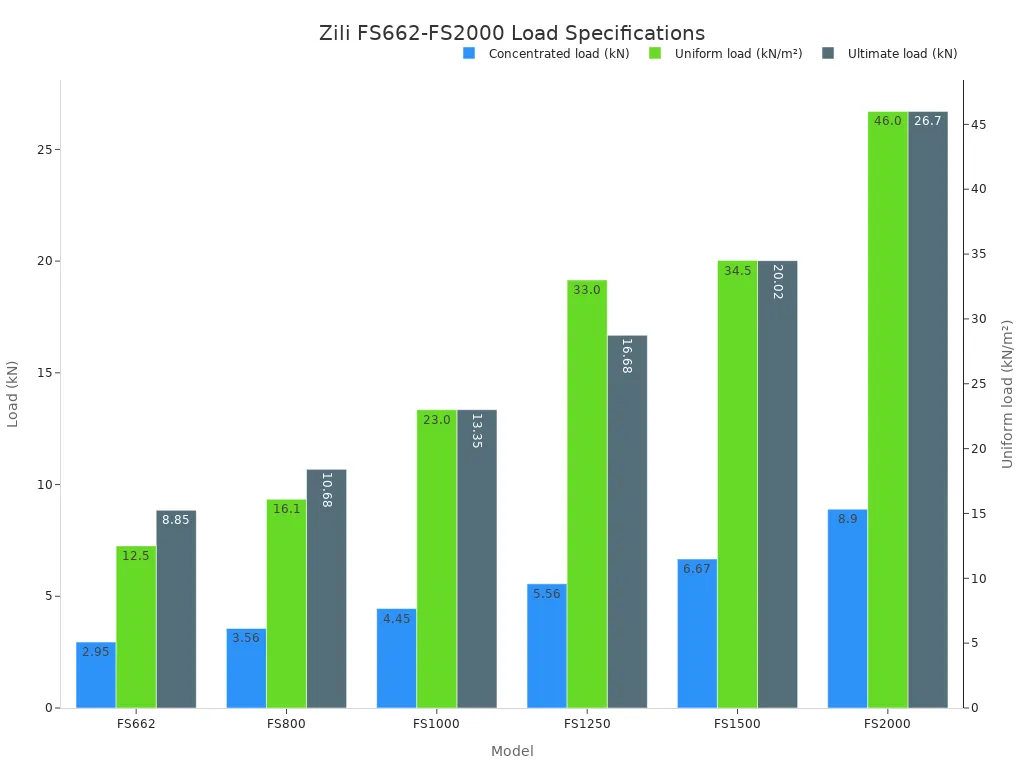
Load ratings go from the FS662 to the FS2000 series. Each model meets CISCA and PSA project standards. The table below shows concentrated, uniform, and ultimate load values across the range.
Model | Concentrated Load (lbs / kN / kg) | Uniform Load (kN/m²) | Ultimate Load (kN) |
|---|---|---|---|
FS662 | 662 / 2.95 / 300 | 12.50 | 8.85 |
FS800 | 800 / 3.56 / 363 | 16.10 | 10.68 |
FS1000 | 1000 / 4.45 / 454 | 23.00 | 13.35 |
FS1250 | 1250 / 5.56 / 567 | 33.00 | 16.68 |
FS1500 | 1500 / 6.67 / 680 | 34.50 | 20.02 |
FS2000 | 2000 / 8.90 / 906 | 46.00 | 26.70 |
The system also holds IATF 16949 and ISO certifications. These credentials confirm steady quality across production runs.
Durability, Weight, and Installation
An epoxy anti-corrosion coating protects every steel part. This finish makes service life longer in humid or chemically exposed rooms. The bolted stringer understructure ties stringers to pedestal heads. That connection cuts panel movement and spreads loads evenly. Workers can lift panels by hand for fast cable access.
Installation follows a clear order. First, crews prepare a clean, level subfloor. Next, they bolt stringers to pedestal heads to lock the grid. Then they set the steel cement raised floor panels onto the grid. Finally, they add trim and edge pieces. This steel cement raised flooring system supports both gravity-held panels and lateral resistance for rolling loads. The result is a durable raised floor for demanding technical spaces.
Steel Flooring Costs and Best Use Cases
Cost Factors and Pricing Range
Steel raised floors cost more at the start than wood core or aluminum choices. The higher price comes from raw materials and complex manufacturing. But a steel raised access floor lasts longer and needs less upkeep. That longer service life lowers total ownership costs over time.
Many things shape the final price per panel. Panel construction, needed load capacity, raised floor height, surface finish, pedestal system, and stringer requirements all play a part. Project quantity and installation needs also affect the quote. Two 600 × 600 mm panels can differ a lot in price. One may use a standard office finish. The other may need higher load capacity, greater floor height, or a special surface finish.
The understructure type also changes the cost. A stringerless system places panels right on pedestal heads and usually has lower component cost. A stringered system adds horizontal members that connect pedestals. This raises the price but improves lateral stability, panel alignment, and rolling-load performance. Stringers also boost seismic response. The choice depends on floor height, equipment loads, rolling traffic, seismic requirements, and desired rigidity.
A lower initial bid may leave out important components or rely on assumptions that differ from other proposals. Every bid should be normalized against the same scope. Do not compare a panel-only material quote with a complete installed-system proposal — they are not equivalent.
Where Steel Panels Perform Best
Steel panels work best in data centers, control rooms, and high-traffic offices. Data centers use the underfloor plenum for power distribution, network cabling, and conditioned air from precision cooling. This setup supports server expansion, relocation, and replacement without major construction. It improves uptime and scalability.
Control rooms for utilities, transportation, manufacturing, and emergency operations also gain from it. Steel panels support video walls, operator consoles, communications equipment, and monitoring systems. Network Operations Centers organize large amounts of power and communication cabling beneath the floor. Workstations can be reconfigured as needs change.
ZILI's project experience includes the Beijing Baidu office building and the Beijing Mobile Communication Company office building. These projects show how steel cementitious flooring handles heavy equipment and constant foot traffic. Concrete-filled steel panel systems use a welded steel shell with a high-density cementitious core. This build gives high strength, dimensional stability, fire resistance, and acoustic performance.
Aluminum Raised Flooring
Composition and Load Capacity
Aluminum raised flooring panels are made from strong aluminum alloy. Companies make these panels using precision die casting, permanent mold casting, or precision casting. The panels have no concrete inside them. This build gives them the same structure all the way through and exact sizes.
A 600 × 600 mm panel is common for this type of access floor. Buyers should check panel length, width, thickness, squareness, flatness limits, edge shape, and surface finish thickness. It also matters that panels can be swapped with each other. One recorded example is an HT FS800 HPL panel at 600 × 600 × 35 mm with its own tolerances.
Die-cast aluminum panels handle medium loads well. The Huilian HLS300 to HLS3000 series shows these typical ratings:
Load Type | Typical Rating |
|---|---|
Concentrated load | 300–3000 kgf/6.45 cm² (deflection ≤ 2.0 mm) |
Ultimate load | 600–6000 kgf/6.45 cm² |
Uniform load | 800–6000 kgf/m² (deflection ≤ 1.0 mm) |
These ratings are lower than the heaviest steel panels. Aluminum still holds most office equipment, workstations, and light server racks.
Durability, Weight, and Installation
Aluminum fights rust on its own. This trait makes aluminum panels good for wet places like damp computer rooms and drug labs. It also gives off few particles, so it works well in ISO cleanrooms, chip-making plants, and aerospace uses. The material does not attract magnets and can be fully recycled.
The light build makes panels easier to handle and place during setup. Crews can move panels by hand with less tiredness. For grounding, all metal supports and floor edges should be linked in a row. This lets static electricity flow out smoothly. In damp rooms, aluminum alloy is the top choice. Checking the bracket's anti-rust layer often helps keep it working well.
Aluminum raised floors give a useful mix of strength, rust resistance, and low weight. These raised floors fit projects where steel panels would put too much load on the structure.
Aluminum Flooring Costs and Best Use Cases
Cost Factors and Pricing Range
Die-cast raised access panels are the most expensive raised floor type. Aluminum raw materials cost more than steel. The precision die-casting process also adds manufacturing cost. These panels cost more because they resist rust, release few particles, and do not attract magnets. Cleanrooms, labs, and semiconductor plants value these features. A normal server room rarely needs them.
Die-cast raised access panels: $110140/m² | $3442/ft²
The cost gap is easy to see among materials. Woodcore panels are the cheapest. Hollow steel panels are low to moderate in price. Concrete-filled steel panels are moderate to high in price. Die-cast panels cost the most. Steel panels are usually 1.5 to 3 times cheaper. This gap affects offices that only want cable access and do not need special environmental needs.
Where Aluminum Panels Perform Best
Humid places and upper floors with weight limits are best choices. A die-cast panel makes its own protective oxide layer, so it resists rust without extra coating. These raised floors work well in damp computer rooms, drug labs, and coastal buildings. Upper-floor renovation projects also benefit. Because the alloy is light, it lowers the load on the building and makes panels easier to carry. Contractors like the lighter weight because it clearly helps with installation on upper-floor projects.
Cleanrooms and sensitive labs need no dust and few particles. Die-cast raised access panels meet ISO 14644 particle control standards. They do not attract magnets, resist germs, and clean easily. To manage airflow, these panels usually provide 10% to 55% open area for ventilation. Steel panels with high-open-rate tiles beat them in busy data-center aisles, where cooling air matters most.
Here is the experts' final advice: pick steel high-open-area tiles for busy data-center aisles so cooling works best. Cleanrooms, labs, and damp places must use die-cast panels to avoid zinc whisker, dust, and rust risks. Check the concentrated load rating and the 10-year lifecycle cost before you choose.
Wood Core Raised Flooring
Composition and Load Capacity
A wood core raised floor panel has a high-density particle board core inside. The core is fully wrapped in galvanized steel or aluminum sheets. This wrapping boosts load performance, fire resistance, and long-term structural strength. Core density runs from 680 to 720 kg/m³.
Core Board: High-density particle woodboard as the central substrate
Load capacity is lower than steel or calcium sulfate panels. Wrapped panels usually carry a concentrated load rating of 6 to 10 kN. The table below shows common ratings for wood core raised flooring.
Model | Concentrated Load (N) | Ultimate Load (N) |
|---|---|---|
FS800 | ≥ 3350 | ≥ 16100 |
FS1000 | ≥ 4550 | ≥ 23000 |
FS1250 | ≥ 5560 | ≥ 33000 |
Standard panels reach at least 3,000 N concentrated load and 8,000 N ultimate load. These ratings fit general office equipment and light traffic. Wood core raised flooring costs less than calcium sulphate raised flooring and steel systems. It also runs quieter underfoot.
Durability, Weight, and Installation
Wood core raised floor panels are lighter than steel or calcium sulfate panels. Crews can carry and place them by hand with less effort. Installation is fast on a level subfloor. Panels drop onto pedestals and stringers, then lock into the grid.
Fire safety depends on proper treatment. Factory-applied fire-retardant treatments soak into the wood structure and stay effective throughout the panel's service life. A Class A rating per ASTM E84 requires a flame spread index of 0 to 25 and a smoke developed index of 0 to 450. These treatments meet International Building Code requirements for interior finishes.
Acoustic performance is a major strength. High-density composite wood core slabs soak up mechanical vibrations from foot traffic and rolling office equipment. This dense wood matrix reduces hollow footfall sounds and harsh noise reflections in open work areas. It dampens impact energy before it reaches structural floors. It also lowers speech clarity between nearby workstations, improving focus and privacy.
Wood panels are not the main solution for sound isolation between spaces, but they excel at absorbing sound within a space to control reverberation and reduce noise buildup on ceilings and walls.
An anti-static wood core raised floor option adds static control for electronics-heavy offices. An encapsulated wood core raised floor resists moisture and wear. An anti-static wood core flooring finish protects sensitive equipment. An encapsulated wood core flooring build extends service life in busy rooms. These features make wood core raised flooring a practical choice for general office spaces.
Wood Core Flooring Costs and Best Use Cases
Cost Factors and Pricing Range
Wood core raised flooring is the most budget-friendly option per square foot. The core uses high-density particleboard instead of steel or aluminum. This material costs far less than metal. The galvanized steel wrap adds some cost, but the total stays low. Buyers who only need cable access get strong value from this type.
Panel size, core density, wrap material, and finish all change the price. A basic laminate top costs less than a specialty anti-static surface. Project quantity also matters. Large orders lower the unit price. An encapsulated wood core flooring build costs more than a standard panel, yet it still undercuts steel systems. For budget-driven offices, wood core raised flooring delivers the lowest entry point among the three types.
Where Wood Core Panels Perform Best
Wood core panels need more care than steel or aluminum. The wood core can swell when moisture reaches it. Spills should be wiped up quickly. Heavy rolling loads can dent the surface over time. Steel panels resist this wear with far less attention. Aluminum panels also shrug off moisture without special handling. A wood core raised floor rewards owners who plan simple, routine upkeep.
General office spaces, schools, and libraries fit this product well. These rooms hold desks, computers, and light equipment. Loads stay modest. The quiet surface helps in classrooms and reading rooms. An anti-static wood core raised flooring option suits offices with many electronics. Raised floors of this type also install fast on a level subfloor. Owners who weigh cost against performance often choose wood core for these settings.
Side-by-Side Comparison of Raised Floor Systems
Load, Durability, and Weight Trade-Offs
To choose a raised office floor, first match the panel strength to the loads in the room. Each material family handles loads differently. The table below shows the practical differences.
Parameter | ZILI FS-Series Panel | Aluminum Raised Floor | Wood Core Raised Floor |
|---|---|---|---|
Concentrated load | FS662 to FS2000 (662 to 2,000 lb / 2.95 to 8.90 kN), CISCA and PSA compliant | Die-cast series from roughly 300 to 3,000 kgf, depending on model | FS800 to FS1250 ratings, from ≥3,350 N to ≥5,560 N |
Ultimate load | 8.85 to 26.70 kN across the FS range | Typical die-cast values from 600 to 6,000 kgf | ≥16,100 N to ≥33,000 N across listed models |
Panel weight | Heavy; provides rigidity and stability | Lightest of the three | Lighter than metal-filled panels |
Durability | Epoxy anti-corrosion coating; cementitious core | Longest service life with minimal maintenance | Good in dry spaces; not for high humidity or heavy loads |
Fire performance | Cementitious core is Class A non-combustible | Metal panels do not feed flame | Treated cores can reach Class A when correctly processed |
The space under the floor is why offices choose raised floors. All three keep utilities easy to reach below the panels. Each rests on a pedestal grid, but how parts connect changes stiffness. ZILI's All-Steel Raised Floor is the standard for tough spaces. Its strong shell and cementitious core carry FS662 to FS2000 ratings. The floor meets CISCA and PSA standards. It also holds IATF 16949 and ISO certifications. The cementitious core resists moisture, which helps in humid equipment rooms. For data centers and busy offices, steel cement raised flooring is still the standard.
Ratings need context. DIN EN 12825 and PSA MOB PS/SPU rate raised access floors by ultimate load, safety factor, and bending under working load. CISCA adds heavy-duty ratings for rooms where downtime is critical. Buyers should also check static control. A compliant floor must show surface resistance from 10⁶ to 10⁹ Ω. It must also drop a 5,000 V charge to below 50 V within 2 seconds under IEC 61340-5-1. Aluminum panels handle moderate office equipment well, but heavy server racks are too much. Wood-core panels fit standard workstations and light traffic. For rolling loads, a metal panel with a cementitious core gives better side-to-side stability than a lighter core.
Cost, Installation, and Environmental Trade-Offs
Price is not the only cost. The lifetime cost includes upkeep, how often panels must be replaced, and recycling at the end. Aluminum panels cost the most because raw aluminum and die-casting are expensive. Wood-core panels cost the least. Metal-filled panels are in the middle.
Many contractors install wood-core panels the fastest on a level subfloor. Aluminum panels are easy to carry by hand, which helps in upper-floor renovations. Metal-filled panels take longer to place because each panel is heavier.
Each of the raised floors handles rolling loads differently. In a standard office, wood-core is the light, budget-friendly option. In a data center, choose the metal-filled standard panel.
The floors also differ in their environmental effects. Aluminum can be fully recycled and gives off few particles, so it fits cleanrooms. Metal shells can be recycled, but mixed cores make separation harder. Wood-core panels vary in recyclability and need an expert to take them apart. Low-VOC adhesives and finishes are available for all three types. An access floor with underfloor air distribution cuts HVAC energy use by 20 to 30 percent, and all materials share this benefit.
Steel raised office flooring delivers high load capacity and rigidity for demanding rooms. Aluminum panels stay light and resist moisture. Wood core raised flooring costs the least and feels quiet underfoot.
Match the material to the space. Data centers need steel. Retrofit or upper-floor offices benefit from aluminum. Budget-conscious general offices do well with wood core. Before choosing any raised floor, weigh four points: load requirements, budget, installation timeline, and long-term durability. That checklist turns a complex decision into a clear one. The right raised floors system supports your office for decades.
FAQ
Which raised office flooring type is best for a data center?
Steel. An all-steel raised floor with a cementitious core handles FS662 to FS2000 loads and meets CISCA and PSA standards. It also stands up to moisture and fire. Data centers need that strength for server racks, cable management, and underfloor cooling air.
How much load can each access floor type handle?
Steel panels hold up to 2,000 lb of concentrated load. Die-cast aluminum panels take about 300 to 3,000 kgf, based on the model. Wood core panels are rated from ≥3,350 N to ≥5,560 N. Match the rating to your heaviest equipment before you pick.
Is aluminum raised flooring more expensive than steel?
Yes. Aluminum raw material and die-casting cost more, so die-cast panels run about $110–140/m². Steel panels usually cost 1.5 to 3 times less. Pick aluminum only when moisture resistance, low weight, or cleanroom particle control matters.
Can wood core raised flooring handle heavy equipment?
No. Wood core panels work for desks, computers, and light traffic. Heavy rolling loads can dent the surface, and moisture can swell the core. For server racks or constant heavy traffic, choose a steel or aluminum raised access floor instead.
Which elevated floor works best for upper-floor offices with weight limits?
Aluminum. Its light panels lower the structural load and are easier to carry during installation. This makes aluminum access floors a great fit for retrofit projects and upper-floor renovations where extra weight is a concern.