






What are the best anti-static flooring options for data centers?
 May 14, 2026|
 View:194
If you want to keep your data center safe, you need a data center raised access floor that follows strict rules. Many places use ESD flooring, raised access floors, or concrete with special coatings. The table below shows how each flooring type is different:
Flooring Type | Characteristics |
|---|---|
ESD Flooring | Works very well, lasts long, and saves money; stops electrostatic discharge. |
Concrete Flooring | Cheap and strong; can get dusty unless polished. |
Static Dissipative Tile | Saves money; might not always stop static if things change. |
Carpeting | Can make static and lint; anti-static lining only helps for a short time. |
Static electricity can hurt servers and cause them to stop working. Rules like ANSI/ESD S20.20 help you pick the right flooring. Brands like ZiLi make good choices. You should always pick a data center raised access floor that fits your data center and follows the rules.
Key Takeaways
Pick ESD flooring to keep your data center safe from static electricity. It stops harm to servers and other equipment.
Think about how many people walk in your data center and the environment when you pick flooring. Strong panels are needed if many people walk or if there is heavy equipment.
Test your ESD flooring often to make sure it works well. Try to test it every year, or more if the area is busy.
Follow rules like ANSI/ESD S20.20 for safety and good performance. This keeps your equipment safe and your data center working well.
Talk to experts and look at custom options for your flooring. Custom solutions can make your data center safer and work better.
Why Data Centers Need Antistatic Flooring
Static Electricity Risks
Static electricity can be a big problem in data centers. When you walk or move carts, you can make static charges. If you do not control static, it can shock your equipment. Here are some main dangers you should know:
Electrostatic discharge can break or ruin important electronic parts.
Hardware can stop working because of static, and you might not see it right away.
Static shocks can make you lose data, crash systems, or break devices.
If static happens a lot, it can slowly damage parts and make them less strong.
Problems from ESD can make your data center stop working and cost a lot of money.
Normal floors do not stop static, so they cannot keep your machines safe.
Static can cause quick or hidden problems, which means more repairs and warranty claims.
Note: You need to control static to keep your electronics safe. A good environment helps your data center work well.
ESD Protection Benefits
You can stop these problems by using esd flooring and antistatic flooring. These floors help control static and stop things like broken data, damaged hardware, and sudden shutdowns. ESD flooring has special stuff that sends static charges safely into the ground. This keeps static away from your servers and network tools.
Antistatic flooring helps control electrostatic discharge in your work area. It grounds static, so your RAM, CPUs, and other parts stay safe. This means your machines break less and last longer. With esd flooring, you get full esd protection that keeps your data center running. You also save money on repairs and downtime.
If you want good esd protection, you need antistatic flooring and esd flooring in your plan. These choices protect your data center and help you worry less.
Data Center Raised Access Floor Options
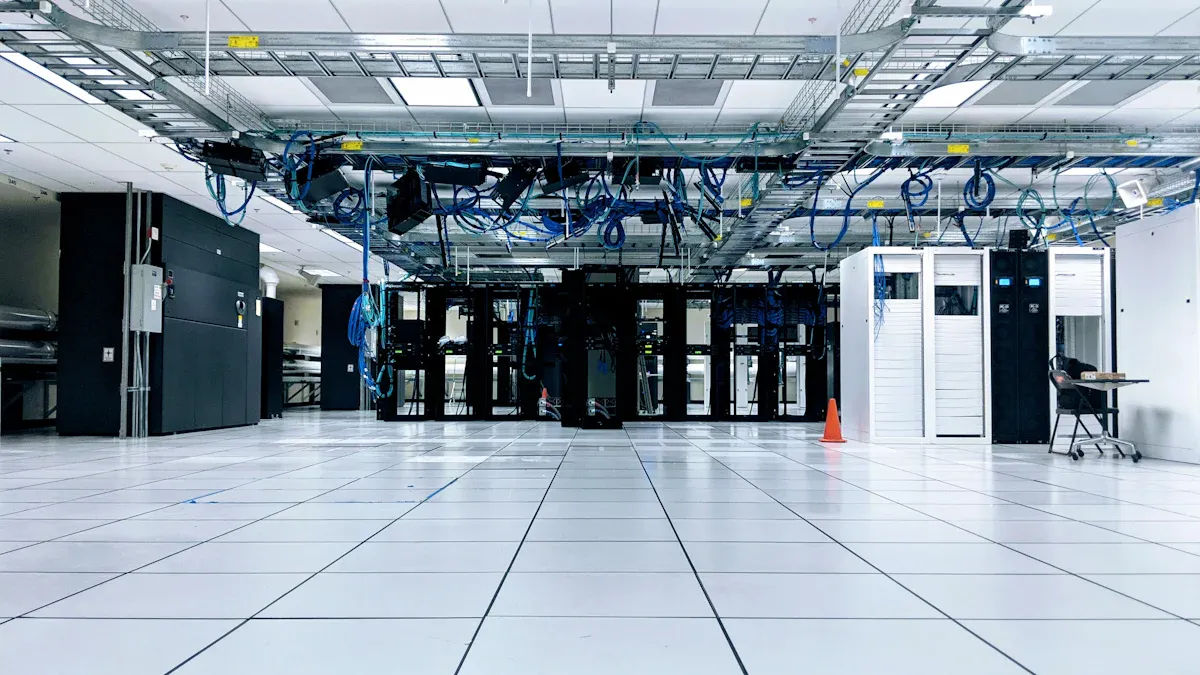
When you pick a data center raised access floor, you look at the panels and the core. These choices help stop static and keep your equipment safe. ZiLi Access Raised Flooring has many antistatic flooring options. You can choose panels that fit your needs and follow esd flooring rules.
HPL Surface Panels
HPL surface panels have a strong top layer. They protect against scratches and heavy use. These panels are good if you move equipment a lot. The surface is smooth and easy to clean. This helps keep your data center safe from static. HPL panels send static charges to the ground. You can count on these panels for long-lasting antistatic flooring.
Tip: HPL panels work well in busy areas. They last a long time and keep your esd flooring safe.
ZiLi Access Raised Flooring has HPL panels with strong cores. You can lift the panels for repairs. The panels hold heavy machines without bending. You get strong and flexible floors for your data center.
PVC Surface Panels
PVC surface panels have a polyvinyl chloride top layer. They resist chemicals and moisture. These panels are easy to clean and do not stain. PVC panels protect your antistatic flooring from harsh chemicals. They keep your esd flooring steady. You can clean the panels with a damp cloth and mild soap.
PVC panels resist most chemicals.
They do not rust or break easily.
You can use them in humid places.
The panels do not catch fire and are tough.
ZiLi Access Raised Flooring gives you PVC panels in many styles. You can pick panels that match your data center floor. The panels are light and easy to move. You get strong protection and easy cleaning.
Ceramic Tile Panels
Ceramic tile panels have a hard surface. They give the best protection from static. These panels last a long time and handle lots of people walking on them. The surface does not let germs grow, so your workspace stays clean. Ceramic panels help stop static and protect your equipment.
Advantage | Description |
|---|---|
Resistance to static discharge | Ceramic tiles stop static charges, lowering the risk of static in data centers. |
Durability | They handle lots of use and big temperature changes, so they last a long time. |
Hygienic properties | The smooth surface keeps out germs, so they are easy to clean. |
ZiLi Access Raised Flooring has ceramic tile panels with strong cores. You can use these panels where you need extra protection. The panels fit your data center floor and help keep your antistatic flooring safe.
Calcium Sulphate Core Panels
Calcium sulphate core panels have a natural gypsum core. They give the best fire safety and resist moisture. These panels do not burn and meet high fire safety rules. The core stays strong and does not crack. You can use these panels in humid places.
Flooring Type | Fire Rating Comparison | Key Fire Safety Traits |
|---|---|---|
Calcium Sulphate | Much better than wood core | Non-combustible core, meets high fire rating standards (A1) |
Wood Core | Can be flammable | Less stable under high temperatures |
Steel-Cementitious | Good fire rating | Stability under high temperatures is inferior |
Calcium sulphate panels help your antistatic flooring last longer. You get strong esd flooring that keeps your equipment safe. ZiLi Access Raised Flooring uses calcium sulphate cores for many panels. You can pick panels that fit your data center and keep your workspace safe.
Note: Calcium sulphate panels resist moisture better than particleboard. You can use them in humid places like Southeast Asia and the Middle East.
When you put in a data center raised access floor, you must follow good steps. Keep the subfloor clean and flat. Lay out the grid and put the panels in place. Clean under the panels often and check for loose tiles. You can call a pro for repairs to keep your antistatic flooring working well.
ZiLi Access Raised Flooring gives you many esd flooring choices. You get panels that last over 25 years. The panels help cool air move under the floor. You can lift panels for repairs and pick styles you like. You get strong, safe, and flexible antistatic flooring for your data center.
Comparing ESD Flooring Types
Wear Resistance
You want your electrostatic discharge prevention flooring to last a long time. People walk on these floors every day. HPL panels are very strong and do not scratch much. They can hold heavy machines without getting damaged. PVC panels also protect the floor, but they might show marks faster in busy spots. Ceramic tile panels have the hardest surface. These tiles do not get scratched or dented easily. That is why they are great for places with lots of people moving around. If you use antistatic flooring that does not wear out fast, your esd flooring will work well for many years.
Moisture Performance
Water can hurt some floors, but special esd flooring helps stop this. PVC panels do not let water or wet air in. You can use them in damp rooms and not worry. HPL panels are best in rooms where the air is not too wet. Ceramic tiles also do well with water and do not soak it up. Calcium sulphate core panels give even more safety because they do not swell or break when wet. Electrostatic discharge prevention flooring that handles water well keeps your data center safe and dry.
Fire Safety
Fire safety is important in every data center. You need electrostatic discharge prevention flooring that does not burn fast. Calcium sulphate core panels meet high fire safety rules. These panels do not catch fire and help keep your machines safe. HPL and PVC panels also help stop fires, especially with a safe core. Ceramic tiles give even more fire safety. If you pick antistatic flooring that is good against fire, you lower the chance of fire damage.
Cost and Longevity
You want flooring that saves money for a long time. Different kinds of electrostatic discharge prevention flooring cost different amounts and last for different times:
Polyurea flooring costs more at first but lasts over 15 years with little care.
Epoxy flooring costs less to put in but needs to be changed every 3-5 years, so it can cost more later.
Most antistatic raised access flooring in data centers lasts about 20 years. With good care, some floors last even longer.
A good raised flooring system can last 25 years or more if you put it in and take care of it well.
When you choose esd flooring, think about both the price and how long it will last. Static-dissipative flooring and conductive flooring both help stop static, but you should pick the one that fits your needs and budget.
Industry Standards for Antistatic Flooring
When you choose esd flooring for your data center, you need to make sure it meets important industry standards. These standards help you keep your equipment safe and your facility running smoothly. Let’s look at the main rules you should know.
Electrical Resistance (ANSI/ESD S20.20)
You want esd flooring that controls static electricity. The ANSI/ESD S20.20 standard tells you how much resistance your floor should have. This helps prevent static from building up and damaging your equipment. Here is a table that shows the key requirements:
Requirement | Value |
|---|---|
System Resistance | ≤ 3.5 x 10⁷ ohms (ANSI/ESD STM97.1) |
Charge Generation | ≤ 100 volts (ANSI/ESD STM97.2) |
Floor Material Resistance | 1.0 x 10⁴ ≤ Rg ≤ 1.0 x 10⁹ ohms (ANSI/ESD S7.1) |
Note: If your esd flooring meets these numbers, you lower the risk of static shocks in your data center.
Mechanical Performance (EN 12825)
You need antistatic flooring that can handle heavy equipment. The EN 12825 standard checks if raised floors are strong and stable. When you pick esd flooring that follows this rule, you know it will last and keep your machines safe.
EN 12825 makes sure your raised floor can hold heavy IT equipment.
The standard sets rules for how much weight the floor can take and how much it can bend.
High-density calcium sulphate gives your floor extra strength and keeps it flat.
Products that meet EN 12825:2001 work for projects all over the world.
Fire Classification
Fire safety is very important in any data center. You want antistatic flooring that does not burn easily. Many esd flooring products have a UL94 HB fire rating. This means the floor helps slow down fire and keeps your equipment safer.
Antistatic flooring with UL94 HB rating gives you better fire protection.
Floors with this rating help stop fire from spreading quickly.
Tip: Always check the fire rating before you choose esd flooring for your data center.
Proper Grounding for ESD Flooring
Grounding Methods
You need good grounding for your ESD flooring to work. If you do not ground the floor, static can build up and hurt your equipment. There are a few ways to ground your floor. Each way helps move static charges safely into the ground.
Grounding Method | Description |
|---|---|
Copper grounding strips | Put under the epoxy system for strong grounding. |
Conductive primers | Linked to the building ground to help static go away. |
Grounded columns, walls, or electrical points | Give more ways to ground for better ESD control. |
Tip: Always connect your ESD floor to the main ground of the building. This keeps your static control working well.
You should keep these things in mind: Proper grounding is very important for ESD control. If you do not ground it right, your ESD floor might not work. Knowing how to take care of grounding helps it work for a long time.
Testing and Maintenance
You need to test your ESD flooring to make sure it works. Checking often helps you find problems early. ANSI/ESD S20.20 says you should test your ESD flooring every year. In busy or risky data centers, you may need to test every three months or even every month.
Yearly testing keeps your ESD floor safe and working.
Busy places may need checks every three months or every month.
Conductive flooring should be between 2.5 × 10⁴ and 1.0 × 10⁶ ohms.
Dissipative flooring should be between 1.0 × 10⁶ and 1.0 × 10⁹ ohms.
Note: Use a resistance meter that is set right for good results. If you find a problem, fix it fast to keep your data center safe.
Testing and taking care of your ESD flooring helps it last longer. You keep your equipment safe and your data center running well.
Choosing the Right Flooring for Your Data Center
Assessing Traffic and Environment
You need to see how many people walk on your floor. Machines also move across the floor every day. If lots of people and heavy racks are in your data center, you need strong panels. Think about these things when picking antistatic flooring:
Load-bearing capacity keeps your floor safe under heavy racks.
ESD protection levels help prevent static shocks.
Chemical resistance protects against spills.
Substrate condition makes sure your floor stays flat.
Moisture exposure can affect how long your floor lasts.
Maintenance needs decide how often you must clean or test your floor.
Low humidity can make more static electricity in your data center. Walking and airflow rub together and create static. Antistatic flooring helps control these risks and keeps your equipment safe.
Tip: Check your room’s humidity and traffic before you pick your flooring. If your space is cool and dry, you need flooring that stops static buildup.
Budget and Maintenance
You want to spend less money and keep your floor working well. Different antistatic flooring types need different care. Look at this table to see common maintenance tasks:
Maintenance Task | Description |
|---|---|
Annual Testing | Test resistance and check calibration every year. |
Regular Cleaning | Remove dust to keep conductivity strong. |
Humidity Control | Keep humidity between 40-60% to stop static buildup. |
Personnel Training | Teach staff about ESD risks and grounding. |
Equipment Maintenance | Inspect and calibrate ESD-safe tools. |
Grounding Practices | Make sure all equipment is grounded. |
Monitoring | Audit and test resistance for compliance. |
You should check logs, test your tools, and write down results. Good maintenance keeps your data center flooring solutions working for years.
Compliance and Customization
You must follow rules for safety and performance. Pick flooring that meets standards like ANSI/ESD S20.20 and EN 12825. Customization helps you get the best fit for your space. Brands like ZiLi offer many options:
Customization Option | Benefit for Data Centers |
|---|---|
Custom Designs | Save money with tailored solutions |
Planning Assistance | Get support through your project |
Installation Help | Ensure proper setup and function |
Textures and Colors | Match your branding and environment |
Anti-slip Properties | Stay safe in busy areas |
Moisture-resistant Finishes | Protect against water damage |
Load-bearing Capacities | Support heavy equipment |
Panel Sizes | Fit your room perfectly |
Sound-absorbing Coverings | Lower noise in your workspace |
Anti-static Features | Reduce static electricity risks |
ZiLi also gives OEM services for special needs. You can get panels that fit your exact size, color, and safety requirements. This makes your data center safer and more efficient.
Note: Do not make mistakes like bad grounding or ignoring humidity. Always test your substrate and pick the right topcoat for your flooring.
You should pick raised access floor systems for your data center. These floors help keep your equipment safe from static electricity. Always follow the right rules and make sure your floor is grounded well. Use static-resistant material to cover your floor. Clean the floor with only anti-static cleaners. This helps protect your equipment from problems caused by static. If you do not, your data center could stop working for a long time.
Think about what your building needs and how much ESD protection is best.
Following the rules helps keep your equipment safe.
Rules like ANSI/ESD S20.20 say you must have written ESD control plans.
Talk to experts and look at custom flooring from brands like ZiLi. This helps you get good antistatic flooring you can trust.
FAQ
What is the main benefit of anti-static flooring in a data center?
Anti-static flooring keeps your equipment safe from static electricity. It stops electrostatic discharge from hurting your servers and devices. This helps prevent damage and keeps your data safe.
How often should you test your ESD flooring?
You need to test your ESD flooring at least once every year. If your data center is busy, test it every three to six months. Testing often helps you find problems before they get worse.
Can you install anti-static flooring over an old floor?
You can put anti-static flooring on top of many old floors. Make sure the old floor is clean and flat first. This helps the new floor work better and last longer.
What is the difference between static dissipative and conductive flooring?
Type | Resistance Range | Best Use |
|---|---|---|
Static Dissipative | 1.0 × 10⁶ – 1.0 × 10⁹ Ω | Data centers, offices |
Conductive | 2.5 × 10⁴ – 1.0 × 10⁶ Ω | Labs, special factories |
Tip: Static dissipative flooring works best for most data centers.